
Most decisions about where to set up a business focus on cost and paperwork. Those matter. But there is a third factor that rarely gets enough attention and often makes the biggest difference over time. Where you are physically located relative to your customers, suppliers, and partners. Dubai’s answer to that question is hard to argue with.
Why does Dubai's location matter so much?
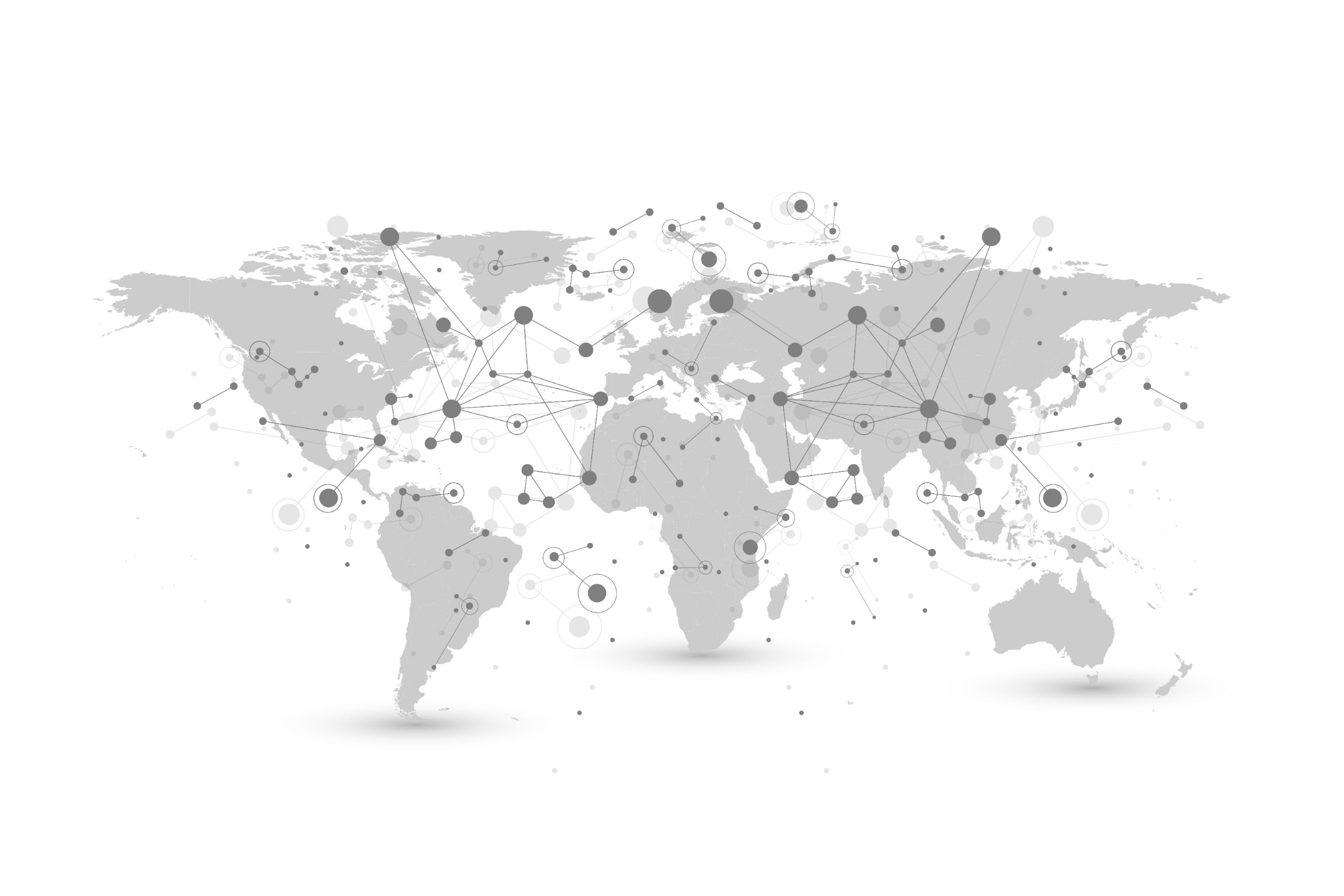
Dubai sits at the intersection of Europe, Asia, and Africa. Within a four-hour flight you can reach India, most of Southeast Asia, the entire Middle East, East Africa, and Central Asia. Within eight hours you cover most of Europe and North Asia.
That four-hour radius covers countries that collectively account for roughly 80% of global GDP. No other city offers the same combination of reach from a single base. This is not marketing. It is a straightforward consequence of where the UAE sits on the map.
What does that reach mean for your business day to day?
India, Pakistan, Bangladesh, and the broader South Asian region are all within a short flight. So is Sub-Saharan Africa, a market of 1.4 billion people growing faster than almost any other region in the world. The Gulf Cooperation Council alone represents a combined GDP of over $2 trillion.
Sales cycles move faster when a founder can be in Mumbai for a morning meeting and back in Dubai that evening. Manufacturing hubs in China, India, Bangladesh, and Vietnam are all reachable quickly for businesses that source physical goods.
Being in Dubai means you are never more than a few hours from the deal, the supplier, or the market you are trying to reach. That proximity compounds over time.
Basecamp team
What about the time zone?
Dubai runs on Gulf Standard Time, UTC+4. This is one of the few time zones that overlaps meaningfully with both Asia and Europe during standard working hours. A Dubai-based team can take calls with Singapore in the morning and London in the afternoon without anyone working unusual hours. For distributed businesses, that window is genuinely valuable.
How does the logistics infrastructure support this?
Jebel Ali Port is the largest port in the Middle East and one of the busiest container ports in the world. It handles over 14 million TEUs a year and connects to over 150 ports globally. For any business moving physical goods, access to Jebel Ali changes what is logistically possible.
Dubai International Airport connects to more than 240 destinations across over 100 airlines. Emirates alone flies to over 150 cities. For founders who travel regularly to close deals or manage operations, the flight options from Dubai are hard to match anywhere else.
Does Dubai give you preferential trade access too?
The UAE has signed comprehensive economic partnership agreements with a growing number of countries. The CEPA with India, signed in 2022, reduced or eliminated tariffs on thousands of goods traded between the two countries. Similar agreements are in place with Indonesia, Israel, Turkey, and several other high-growth markets.
A business set up in a Dubai free zone can use these agreements to move goods at lower tariff rates than competitors based elsewhere. That is a structural advantage, not just a geographic one.
Who benefits most from being in Dubai?
The location and logistics advantages matter most for businesses that trade across borders, source from Asia or Africa, sell into emerging markets, or need regular face-to-face access to clients across multiple countries.
If your business is entirely digital with customers concentrated in one country far from the Gulf, the geographic advantage is less pronounced. But for most businesses with international ambitions, the case for Dubai is straightforward.
Basecamp helps founders set up correctly in Dubai so the structure is built to reach the markets that matter to your business from day one.